Showing posts with label hot on internet. Show all posts

Sunday, April 21, 2013

Boston Bombings: Media Doesn't Own The Story Anymore


With a 17-year-old implicated for the Boston bombings and then exonerated by the internet in mere hours, it's time for the press to start guiding readers through the sea of information and stop pretending there's only one narrative.


Yesterday, the conspiracy nuts at Infowars and the proud tabloid hacks at the New York Post, the amateur sleuths on Reddit and and the top-notch journalists at CNN shared something: They each failed to understand their new roles in a radically changed news environment. 
The shift here is, basically, from the media having one major responsibility  finding, vetting, and sharing new information  to having another one: guiding an audience that has already been exposed to much more.


The job of a news organization and of a citizen has changed with frightening speed in a world where information is everywhere; where the tip line is public; where the distinction between source, subject, and publisher has blurred; and where, crucially, questionable reports and anonymous postings are part of the fabric of that story.
Under the old rules, a responsible citizen passed any potential bit of news he could find on to the professionals. The professionals collected tips, corroborated them, published the ones that panned out. Reporters could protect their readers from bad information indeed, for reporters, the story was defined largely by what was kept from the public; for readers, the story was defined by the story. 
 We can no longer decide which rumors and scraps of information should be dignified with publication a sufficiently compelling scrap of information, be it a picture of a man with a black backpack or an anonymous, single-sentence Reddit post from the scene of the crime, will become news on that merit alone.

The tidbit that spreads the furthest, in the ruthless competition for attention, will often be the most shocking, the one most fully shorn from context. It may be crudely annotated photos assembled by someone who is unburdened by professional standards, unconcerned about reputation, and unfamiliar with the laws of libel and defamation. For him, verification and reporting are not two stages of a process, but contained in one action: sharing. He, with his virtually unlimited cohort, can force a shard of information into the public consciousness with or without permission from the traditional media gatekeepers. While there are still differences between professional reporters and anonymous posters on the internet, the visibility of their work isn't one of them.
Now, the original function of news organizations uncovering and verifying new information — is as important as it's always been. But it's now become the crucial responsibility of a news organization to gather and contextualize information that the media didn't uncover itself. BuzzFeed yesterday referenced but mostly avoided linking to widely shared sets of photos, created by users on Reddit and 4chan, that highlighted dozens of different spectators at the Boston Marathon. Implicit in the post was a hope that the images, which were contributed anonymously and many of which amounted to little more than crowd-sourced profiling, would be ignored. But that hope was obviously in vain. The photos were soon stripped of their already thin context and reposted to conspiracy website Infowars, which was then linked by Matt Drudge. In the meantime, the original photos had been passed around Facebook, Twitter, and every other imaginable avenue, no doubt racking up millions of views.
By the time they were published on the front page of the New York Post, they had been unsubtly recontextualized as photos of the FBI's leading suspects, a framing that was immediately, convincingly, and belatedly challenged on Reddit, the very site where the images originated. T
he media's new and unfamiliar job is to provide a framework for understanding the wild, unvetted, and incredibly intoxicating information that its audience willinevitably see not to ignore it. A Reddit post seen by millions without context is worse for the story, and the public, and to the mission of reporting than the same post in a helpful and informed context seen by many more. Reporting is no longer a question of whether or not to dignify new and questionable information with attention it's about predicting which of it will influence the story, and explaining, debunking, or contextualizing it the best we can. That is, incidentally, what our readers want.

Sunday, April 14, 2013

Look How Quickly the U.S. Got Fat

obesity-map-GIF-jh.gif

This shows the percentages of the U.S. population medically defined as obese, which means a body mass index of 30 or greater. BMI isn't an ideal metric to evaluate obesity, but it's still what the U.S. standardly uses.

By now everyone knows obesity is a serious issue, but it always helps me to see things moving and in color, and makes the "epidemic" terminology make sense. Meanwhile, through 2012, no state has met the CDC's nationwide goal to reduce obesity to 15 percent. According to a Gallup poll out this morning, here are the least and most obese metropolitan areas:
Screen Shot 2013-04-11 at 9.26.27 AM.png
Screen Shot 2013-04-11 at 10.25.15 AM.png

So if we all just move to Colorado we should be fine.

Photo: 2 People Having Sex On Google Street View : Go Australia!

Here Are Two People Having Sex On Google Street View

If you Google the Dukes Highway in Australian and go into Street View... You can see two people, uh, making a pit stop on the side of the road as seen above hahahaha...

If you Google the Dukes Highway in Australian and go into Street View...

And what's even funnier is that they are actually waving at the Google Car

And what's even funnier is they're actually waving at the Google Car.


It's most likely that they saw the Google Car and sped up to set up for a good photo ops...

It's most likely that they saw the Google Car and sped up to set up for a good photo op.

Facebook Is For Stressed & Drunk People


College students who drink the most and are the most stressed out are the most “emotionally connected” to Facebook, according to a new study. Teenagers may be fleeing Facebook, but the social network remains popular with college students or at least with some of the most freaked-out among them. Undergrads who are anxious or drink a lot have a stronger emotional connection to the site than their calmer, less-drunk peers, according to a new study. Researcher Russell Clayton and his coauthors surveyed 229 undergraduates on how "emotionally connected" they were to Facebook, asking how much they agreed with statements like "Facebook is part of my everyday activity" and "I would be sorry if Facebook shut down." They also measured how anxious the students were, and asked them about their alcohol and marijuana use.
They found that both anxiety and alcohol use were associated with greater connection to Facebook. Anxious people may be too stressed out for face-to-face interaction and use Facebook as a substitute, they speculate. And students who use Facebook a lot may see pictures of their friends drinking and partying, causing them to drink more. Or students who drink a lot may become more attached to Facebook than their sober peers, because they need a place to post drunk pictures of themselves.
Marijuana use was actually associated with less connection to Facebook, possibly because it's riskier to post photos of. The authors note that their undergraduate subjects lived in dorms and "likely had to sneak about to partake of marijuana and thus may be away from their computer or Facebook." So even if Facebook's losing ground among teens, it still has America's many drunk, unhappy young adults to rely on.

What Happens To Your Gmail After You Die, had u ever thought ?

Not many of us like thinking about death — especially our own. But making plans for what happens after you’re gone is really important for the people you leave behind. So today, we’re launching a new feature that makes it easy to tell Google what you want done with your digital assets when you die or can no longer use your account.

The feature is called Inactive Account Manager — not a great name, we know — and you’ll find it on your Google Account settings page. You can tell us what to do with your Gmail messages and data from several other Google services if your account becomes inactive for any reason.

For example, you can choose to have your data deleted — after three, six, nine or 12 months of inactivity. Or you can select trusted contacts to receive data from some or all of the following services: +1s; Blogger; Contacts and Circles; Drive; Gmail; Google+ Profiles, Pages and Streams; Picasa Web Albums; Google Voice and YouTube. Before our systems take any action, we’ll first warn you by sending a text message to your cellphone and email to the secondary address you’ve provided.

We hope that this new feature will enable you to plan your digital afterlife — in a way that protects your privacy and security — and make life easier for your loved ones after you’re gone.


6 Supervillains of Nerd Culture


Comic-Con doesn't stand a chance against this real-life Legion of Doom…
The Six SuperVillains of Nerd Culture - Image 1
The Six SuperVillains of Nerd Culture - Image 7

Source College Humour, Thanks to chris for sharing this cool info..

Sunday, April 7, 2013

Facebook Home: You'll Never Check Facebook Again

At a press conference Thursday, Facebook unveiled Home, a new smartphone software design it cryptically said “isn't a phone or operating system,” but is “more than just an app” and will deliver a "completely new experience." That "new experience" doesn’t stop at the phone’s screen. What Home seeks to deliver is not only a Facebook environment for our phones, but also a Facebook environment for our lives. With Home, Facebook has crossed the line between something people check that they have control over, and deploy according to their wishes and needs to become something that’s always on, checking in with us, fighting for attention, waving people we know in our face. 

Rather than a tool we use to talk to others, the phone, thanks to Facebook, has become something that communicates to us. And it’s Facebook that gets to do the talking. Home, which will be available for download on a handful of smartphones next week, is essentially a Facebook-ified version of Google’s Android operating system, modified by Facebook engineers to place the social network at its core. A flow of updates from the News Feed will be the first thing people see when they turn on their phones the newly named “cover feed,” a slideshow of friends’ photos and status updates, will take over the phone’s primary screen, though users can swipe past to access other applications. 

Home also touts “chat heads,” a feature that brings together texting and messaging, replaces names with Facebook photos and lets users message within any application. Ads will be on their way to the cover feed soon, Facebook conceded. And though the social network didn’t say as much, technology observers, such as Om Malik, have pointed out that Home will let Facebook scoop up even more personal information about everything from our locations to our calls. The social network has a very specific idea of what we should be doing on our phones and has designed Home to push that mission. The phone "[puts] people first," Facebook's director of product, Adam Mosseri, explained at Thursday’s press conference, noting that Home’s design purposefully shifted the focus "away from tasks and apps." Seen one way, Home makes communication with loved ones more seamless, more fluid. Seen another, however, Home lets Facebook ensure we don’t have bothersome news readers, workout trackers or even work emails those irksome apps and tasks  distracting us from Facebook. 

 All tech companies want us to spend more time with their products. But Facebook is unique in that its fortunes depend on convincing us to pay attention to it over all else, and it just invited itself to be the DNA of our most personal device, which we carry with us, on average, all but two hours of our waking day. Google, Apple and Microsoft of course want their users to spend hours with their smartphones and consume liberally from the ecosystem of content they have for sale. Yet they compete with each other in no small part to deliver the smartphone software that will be most intuitive, helpful and easy-to-use. Facebook's software isn’t there to necessarily offer the best smartphone software or most intuitive design, but to offer the best version of Facebook, one that more quickly and permanently attracts our attention.

Google Paid this Man $150 Million


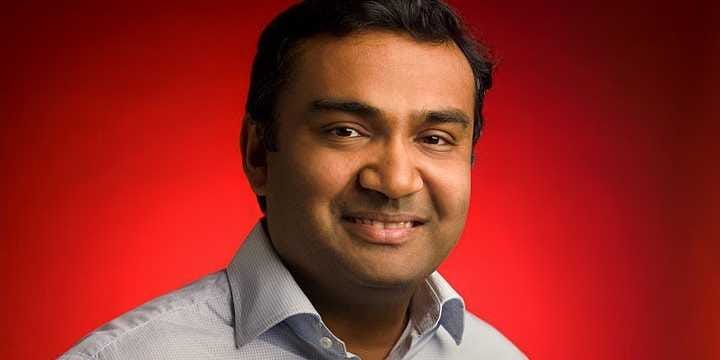
Google executive Neal Mohan

2 years ago, Twitter was in a utter disarray.  On April 14, 2011, Fortune's Jessi Hempel blasted Twitter for failing to launch exciting new products, generate meaningful revenues, or hang on to executive talent. None of this was news to Twitter's board members or CEO Dick Costolo, of course. They'd spent the months prior trying to turn Twitter into "a real company" after years of neglectful management. The first step: hire a chief product officer. The board wanted someone who could fix the company's internal turmoil, revamp its product lineup, and get advertisers spending billions of dollars on the platform.  David Rosenblatt, the former CEO of DoubleClick and Google executive who joined Twitter's board in December 2010, believed he had the perfect candidate. Rosenblatt reached out to Neal Mohan a Google executive who had been Rosenblatt's top lieutenant at DoubleClick. Twitter made an offer, and it seemed like Mohan would accept.
But then he said no. Why?

Because Google wrote a massive check to keep him. Rosenblatt told a friend that Google made him an offer much richer than the one the Knicks had just given star forward Carmelo Anthony.
That February, the Knicks made headlines everywhere for agreeing to pay Anthony $65 million over three years. TechCrunch later reported that Google paid Mohan more than $100 million in stock. In the two years since Mohan signed the deal, Google's stock price has increased about 35 percent, making Mohan's deal worth as much as $150 million.

A $100 million career starts with a $60,000 job

Mohan graduated from Stanford with a degree in electrical engineering in 1996. Then he worked at Andersen Consulting  the company now called Accenture. Then, in 1997, he joined a startup called Net Gravity. It sold enterprise software to digital marketers. This was the beginning of Neal Mohan's $100 million career in Internet advertising. It was a humble start. The gig paid $60,000 per year. On LinkedIn, Mohan lists his title at NetGravity as "senior analyst."  But his boss from that time, Richard Frankel, tells us Mohan was basically a high-end customer support representative.

Frankel says he hired Mohan for two reasons. The first was that it was the 1990s, and Mohan was one of the few people NetGravity could find "who knew a little bit about Internet tech."
The second reason Frankel hired Mohan was he found him to be a "rare" combination an "insatiable technologist" who also had enough business savvy to interact with NetGravity's enterprise customers on a strategic level. "When he worked with a customer, he didn't just help them solve their problems," Frankel said."He helped customers figure out how to better use our technology. That turned into a lot more business for NetGravity."

Frankel soon handed him NetGravity's largest accounts. Mohan made them larger. Frankel believes the secret to Mohan's success, even so early on, was his curiosity. "In a typical meeting with Neal, he asks questions non-stop. He really wants to understand what you're discussing: some new segment, some new company, some customer problem. He wants to understand it  and he can really absorb and digest all the facts that he's getting hit with."

In November 1997, NetGravity was acquired by a another, larger, Internet advertising startup, DoubleClick. He moved from California to New York, where DoubleClick was based. From 1997 to 2003, Mohan's role at DoubleClick expanded from services to sales operations to business operations.

Strangers Can End Up Reading Your Private Facebook Messages


Here's something you probably didn't know: Facebook has a team of employees who read your private messages if they have been flagged by an automated tool. The tool searches for content that appears to violate their terms of service, namely malicious (infected) URLs or child pornography. It's imperfect, of course that's where humans come in.

If a private message is flagged, actual people will jump in and read it. If there is something that could be illegal particularly regarding child exploitation those people contact law enforcement. The intent here is clear and defensible, yet the fact remains: All that stands between your "private" messages and the eyes of a stranger is the snap judgment of an algorithm.
Even more troublesome, OkCupid's readers are sometimes regular users, not employees. These users are deputized to help hand the large volume of "flagged" messages and can view ongoing conversations that may contain private information, whether or not the flagging users' claims are legitimate.
A private message on OkCupid read by a stranger and reposted online. Some moderators also share them publicly on blogs such as ThatsNotOkCupid.com and NotSoNiceGuys.tumblr.com While some aspects of content moderation can be easily automated, many can't. Google notoriously uses freelancers to comb through inappropriate public content, as does Facebook. But the issue of moderating privately shared content is a more complicated one; users should know that a Gmail message could easily be exposed by subpoena and that it is scanned for keywords to serve advertising, but would be mortified if Google employees were known to read "flagged" images. 

Sunday, March 31, 2013

Google Adds 'Treasure Maps' for April Fools' Day

Google-map

Google joined in on the April Fools' Day fun a day early with their latest feature: Treasure Maps. Following last year's prank, 8-bit Google Maps, the company debuted a pirate-style design on Sunday, complete with 2D hand-drawn landmarks and hidden treasure chests. The map uses a spyglass to zoom in for Street View, with a rounded telescopic frame and old-school filter. To access, visit Google Maps and click on the "Treasure" picture icon in the right-hand corner. Instructions for the "beta technology" warn, "Your system may not be able to display at higher resolutions than paper print."

 In a video, Google explains the map belonged to infamous pirate William "Captain" Kidd, and was found on a recent expedition in the Indian Ocean while the team was expanding their underwater Street View collection. Users are invited to help crack the code and find the treasure with hidden clues.


Google Celebrates Easter With Cesar Chavez Doodle


Google enraged conservatives Easter Sunday by observing the birthday of the late labor leader Cesar Chavez rather than commemorating what is considered the holiest Christian holiday with a doodle. It upset some people.

Friday, March 29, 2013

Where Kim Jong-Un for N.Korea got his Apple Computer ?


One of the North Korean photos going viral on Friday  apart from the one showing plans to attack the U.S. with missiles  shows North Korean leader Kim Jong-un with a shiny iMac desktop computer. But Apple complies with U.S. trade embargoes on countries including North Korea, meaning its computers aren't meant to end up there. How did Kim get his iMac?
For ordinary North Koreans, up-to-date phones and computers are difficult, if not impossible, to get. North Korean companies have produced their own knockoff iPad competitors and cell phones, but the sale of Apple products is actually prohibited.
According to Apple's website:
The U.S. holds complete embargoes against Cuba, Iran, North Korea, Sudan, and Syria
The exportation, reexportation, sale or supply, directly or indirectly, from the United States, or by a U.S. person wherever located, of any Apple goods, software, technology (including technical data), or services to any of these countries is strictly prohibited without prior authorization by the U.S. Government. This prohibition also applies to any Apple owned subsidiary or any subsidiary employee worldwide.
An Apple spokesperson didn't immediately respond to a request for comment. Nor did a press contact at the Department of Commerce, which regulates trade embargoes.
This isn't the first time Kim's been seen with what might be an Apple product. Kim was photographed in February with a smartphone that looked like either an HTC model or an iPhone 3  or even a Samsung, the South Korean company.
Personal computers are available in North Korea  in 2011, state TV reported that there were three new models being manufactured there and there is a North Korean operating system, similar to Linux, called "Red Star." But most of the hardware North Korea has touted has been shown to be Chinese.

200% Increase in Facebook Picture Swaps Same Sex marriage

Facebook-red
Facebook dug into the trend to evaluate just how many U.S. users changed their photos. The following charts show the usual profile picture changing habits of users (above) and the increase in the average number of changes (below). Facebook confirmed that the increase began when the HRC shared its call to action, which is noted on the graph with a dotted line.
Facebook also looked into who were the power profile picture-swappers. Comparing changes March 26 (in red) with the previous Tuesday (in black) by user ages, Facebook found the most significant increase among its users closest to age 30, 3.5% of whom changed their profile pictures. Females were slightly more likely than males to change their pictures, with 2.3% of self-reported females making the swap, compared to 2.1% of self-reported males.
Facebook also investigated which counties' users were most likely to change their pictures. In the below map, the darkest red counties showed the most significant changes.
Roughly 6.2% of users in Washtenaw County, Mich., home of the University of Michigan in Ann Arbor, swapped their photos in response to the HRC's campaign. The top 25 counties were loaded with universities, including the University of North Carolina, Duke University, Indiana University, the University of Iowa, Ohio University, the University of Wisconsin, the University of Colorado and the University of Texas.
Urban areas, including San Francisco County, San Mateo County (Silicon Valley) and Washington, D.C., ranked highly, while Los Angeles, New York City and Chicago showed more modest increases.

Sunday, May 13, 2012

Pay Facebook to highlight you Status Updates To More Friends


Facebook is testing an option called “Highlight” that lets you pay a few dollars to have one of your posts appear to more friends. Highlight lets the average user, not Pages or businesses, select an “important post” and “make sure friends see this”,. A tiny percentage of the user base is now seeing tests of a paid version of Highlight, but there’s also a free one designed to check if users are at all interested in the option.
Highlight could show Facebook’s willingness to try more aggressive ways of making money, which should delight potential investors. But Facebook is playing with fire here. The service has always been free for users, and a pay-for-popularity feature could be a huge turn off, especially to its younger and less financially equipped users who couldn’t afford such narcissism.
The official statement from Facebook on this is:
“We’re constantly testing new features across the site. This particular test is simply to gauge people’s interest in this method of sharing with their friends.”
I doubt Facebook is going to see positive reactions to Highlight, but if it did it could turn into an unpredicted revenue stream. Just the fact that Facebook would test this could bolster confidence for potential IPO investors. They want to know the company is interested in striking a more advertiser-friendly balance between a pure user experience and the goals of advertisers. That’s especially important now, as yesterday Facebook had to warn investors that its ad business is in jeopardy as more users access via mobile where it doesn’t show nearly as many ads.
The problem is the potential for Highlighted updates to reduce the general relevance of the news feed. Facebook’s news feed sorting algorithm is designed to show you posts by your closest friends or that have received a lot of Likes and comments. Highlight distorts this, and will encourage news feed spamming club promoters, musicians, small businesses, or anyone else with something to gain from more clicks.

HOW HIGHLIGHT WORKS
If you’re in the test group and post a status update, you’ll see the “Highlight” option next to the Like and comment buttons below it. If clicked you’re shown the prompt above. Depending on what version of the test you’re seeing you’ll either get a free Highlight, or have to pay a dollar or two for the extra news feed prevalence. Facebook’s testing different price points, but users always pay with a credit card or PayPal, never with its virtual currency Credits.
Highlighted posts may appear higher in the news feed, stay visible for longer, and appear to more friends and subscribers. However, they’re not colored differently to make them stand out. And to be clear, this is not like Twitter’s Promoted Tweets which is designed for businesses. Facebook Highlight is for the end-user.
Facebook doesn’t seem to be betting the farm on Highlight, since the user who leaked the test was in New Zealand — a more isolated but English-speaking location where Facebook seems to test features it doesn’t want too many people to know about. That’s smart because it could erode the site’s sense of community. On Facebook, what’s supposed to matter is how interesting your posts are, not how deep your wallet

Break Your iPhone & Get new one for Free


Cellhelmet, a new protective iPhone case from a company called Cellpig. Originally started as a Kickstarter project, the cases recently went into production and are now available for retail sale, so if your phone breaks in the case (excluding water damage), then the company promises to replace it for a year for a $50 handling fee, with no monthly fee for the coverage. Phones are repaired or replaced within three days of receipt and are overnighted back to your address. cellhelmet includes accidental damage coverage for any iPhone 4/4S, regardless if it’s new, used, unlocked or ailbroken. Also, never wait to file a claim. If your device breaks on day one of ownership go ahead and file a claim.  All iPhone 4/4S repairs will be completed withOEM (Original Equipment Manufacturer)Apple parts. Read more @ http://ravikanthl.wordpress.com/2012/05/13/break-your-iphone-get-a-new-phone-for-free/

Sunday, April 29, 2012

Free Online Human Translation Service


Lets say Enough of machine-based online translation services such as Babelfish or Google Translate? Ackuna is a crowdsourced translation project, connecting individuals around the world with human translators who can give you just the right phrasing. The free-to-use site is a side project of Translation Services USA. “We’re building a community of translators and people who need translations, where people can get together to break down the language barrier” Nick Smith, an Ackuna web producer, told Mashable. “There will always be a place for professional translation services for big books and business communications, but this is more for causal translations and stuff that doesn’t need to meet a deadline.” Smith says Ackuna is perfect for someone who is traveling or preparing for a trip. There’s a peer review process, to ensure that translation and grammar are correct. You can also vote on the accuracy of a translation and even earn badges for participation.

Google Maps Cube Game is Live now


Google teased us with a video of a ball and maze game using Google Maps models on a cube. Though it looked fun, it apparently needed a few more months of tweaking and the in-browser game is only just now available. Despite being a tutorial for Google Maps features, it’s a surprisingly fun little time waster. Called Cube, each of the levels covers one or more aspects of Google Maps capabilities; everything from bike paths, to check-ins, to restaurant ratings. The cleverest levels are the ones that introduce new mechanics to the game, like the London level where you use the Underground to warp to different areas or the Mall of America where you navigate the interior of that terrifying labyrinth of consumerism. Once it’s walked you through all that, the game’s final level mish-mashes the cities together, Rubik’s Cube-style. There’s nothing to learn from this level, besides that the Google developers behind this project really enjoyed making it, but it’s a fun and logical conclusion to the game. You can take Cubenow. for a spin now. I’d like to see Google release a level-building tool and allow people to make their own labyrinth games. Though its achingly simple and maybe even a little dumb, its surprisingly addictive. I’d definitely roll a marble through the greatest cities on earth. 

Sunday, April 22, 2012

Pinview Turns Facebook Into Pinterest


Actually a really nice way to look at Facebook, I think? Also, a good reminder: All our social networks are kind of the same. PinView is simple Facebook app that reformats your Facebook account in the style of a Pinterest pinboard. It's actually a pretty nice way to look at Facebook for users who aren't terribly active; it gives you an instant, 10,000-foot view of what your friends are posting, without the need to constantly scroooolllllll. Try it here; it takes about five seconds to install and doesn't make any permanent changes to your account.
Browsing Pinterest Facebook account feels quite a bit like browsing actual Pinterest, in both style and content. There are fewer pictures of food and furniture, and more dudes around. Everyone seems a little more inhibited. There's a lot more news. But other than that the differences are surprisingly subtle. The main difference between the biggest social network and the newest, it turns out, is a simple stylesheet.

Saturday, April 21, 2012

Digital Ways to Make Difference This Earth Day


Did you know you can use digital channels to get involved this year.

1. Plant Trees Through Catalog Spree


Catalog Spree, an eco-friendly app for catalog shopping on the iPad, has partnered with the Arbor Day Foundation, a non-profit conservation and education organization dedicated to planting trees. The Arbor Day Foundation will plant one tree for every download of Catalog Spree during the month of April as part of an “Earth Month” initiative. Download the app here.

2. Fundraise via Edward Norton’s Green Earth Day Challenge


Actor Edward Norton is the United Nations goodwill ambassador for biodiversity, and he’s teaming up with Groupon this Earth Day for an “Earth Day Challenge.” If you’re passionate about a green cause, put together a team and start a fundraising campaign through Norton’s online crowdfunding platform, CrowdRise. The team that raises the most money will win a $25,000 check from Groupon for their organization, and the second and third winning teams will receive $15,000 and $10,000, respectively, for their organizations. But when you think about it, everyone wins from this challenge — each team is generating green ideas and money.
At the time of the press release, the participating organizations include Conservation International, Ian Somerhalder Foundation, Global Green, Conservation Lands Foundation, Friends of the Virgin Islands Nation Park, Wiser Earth and National Wildlife Humane Society. Contest instructions and rules are here, but get going! The contest ends May 15.

3. Recycle E-waste Through HP and Staples


Recycle Keyboard
On April 12, Hewlett-Packard (HP) and Staples announced a free recycling program that allows consumers across the United States to recycle their electronics easily and free.
Customers can drop off their technology for recycling at the service desk of their local Staples store. Staples will collect the devices and consolidate them at its distribution centers, where a certified e-Stewards and R2 recycler will arrange to have the materials transported to one of its processing centers.

4. Play a Social Game for Social Good


Disney Animal Kingdom Explorers is a new ecologically-minded Facebook game inspired by Walt Disney’s Animal Kingdom theme park. Players are part of the Global Wildlife Research team, an international organization of conservationists, environmentalists and naturalists. The game has partnered with the Jane Goodall Institute, a global nonprofit that empowers people to make a difference for all living things.
In honor of Earth Day, the Disney Worldwide Conservation Fund has pledged to donate 20 cents to the Jane Goodall Institute for the DisneyNature Tchimpounga Natural Reserve project for every install and tutorial completion by players referred from the URL www.PlayAnimalKingdom.com. The Disney Worldwide Conservation Fund has pledged to donate up to $250,000 until April 26. Every player makes a difference.

5. Support the Earth, One Inch at a Time


TerraYebo, a for-profit social enterprise with a focus on “doing well by doing good,” has launched MyInchofTheEarth.com, a website with patent-pending technology allowing anyone to claim any square inch of the planet for $1 to support worldwide causes and non-profit organizations.
In recognition of Earth Day and National Park Week (April 21-29), TerraYebo has partnered with the National Park Foundation, the official charity of America’s national parks, which proceeds from MyInchofTheEarth.com will help support.

6. Let Cuteness Educate You About Endangerment


Giant Panda Cub
It’s believed that fewer than 1,600 giant pandas currently exist in the world. That’s why Explore.org will be releasing a new live feed of five giant panda cubs on Earth Day. “There is something magical and inspiring about watching panda cubs interact with each other in real-time,” said Explore.org’s founder, Charlie Annenberg, in a press release. “The hope is that by viewing these cams, people will develop deeper emotional connections not just to the bears, but also to the planet. Once someone has fallen in love with the world again, he or she is more likely to be a better steward of it,” he added.
There are links on Explore.org to help you donate to different causes, and you can share the videos with your networks to spread awareness. Watch the live feed here.

7. Go Green With Google Maps


You’ve probably used Google Maps before, but have you used it to go green? The Biking Directions feature is available in over 200 U.S. cities and in nine Canadian regions, illustrating bike lanes, hills and route suggestions, making it easier to leave your gas guzzler behind.
Google Transit can map the quickest public transit routes in more than 470 cities around the world. And if you want to carpool and avoid traffic, the Traffic layer displays real-time traffic conditions on your route. As an extra perk for those of you who drive electric vehicles, you can easily find electric vehicle charging stations by typing “ev charging station in [your city]” directly into Google Maps.

8. Teach Kids About Conservation With Discovery Education


The Nature Conservancy, the leading conservation organization working in more than 30 countries to protect the environment for future generations, has partnered with Discovery Education to launch Nature Works Everywhere, an online destination that teaches younger generations the importance of environmental conservation.
Nature Works Everywhere provides teachers, students and families with free resources to explore and understand nature.

9. Sell a Book, Save a Tree With Lulu Publishers


Digital Tree
Lulu.com is an open publishing platform, helping authors and artists create work in multiple formats and markets and helping buyers find the content they need. They’ve always been keen on staying green, using the latest in print-on-demand and e-book technology and utilizing a global network of printers to help cut down the carbon imprint from shipping books.